Why Your Cholesterol Might Rise on Keto (And What It Means)
Started keto and your LDL went up? You're not alone. Here's what the research says about cholesterol changes on low-carb diets.
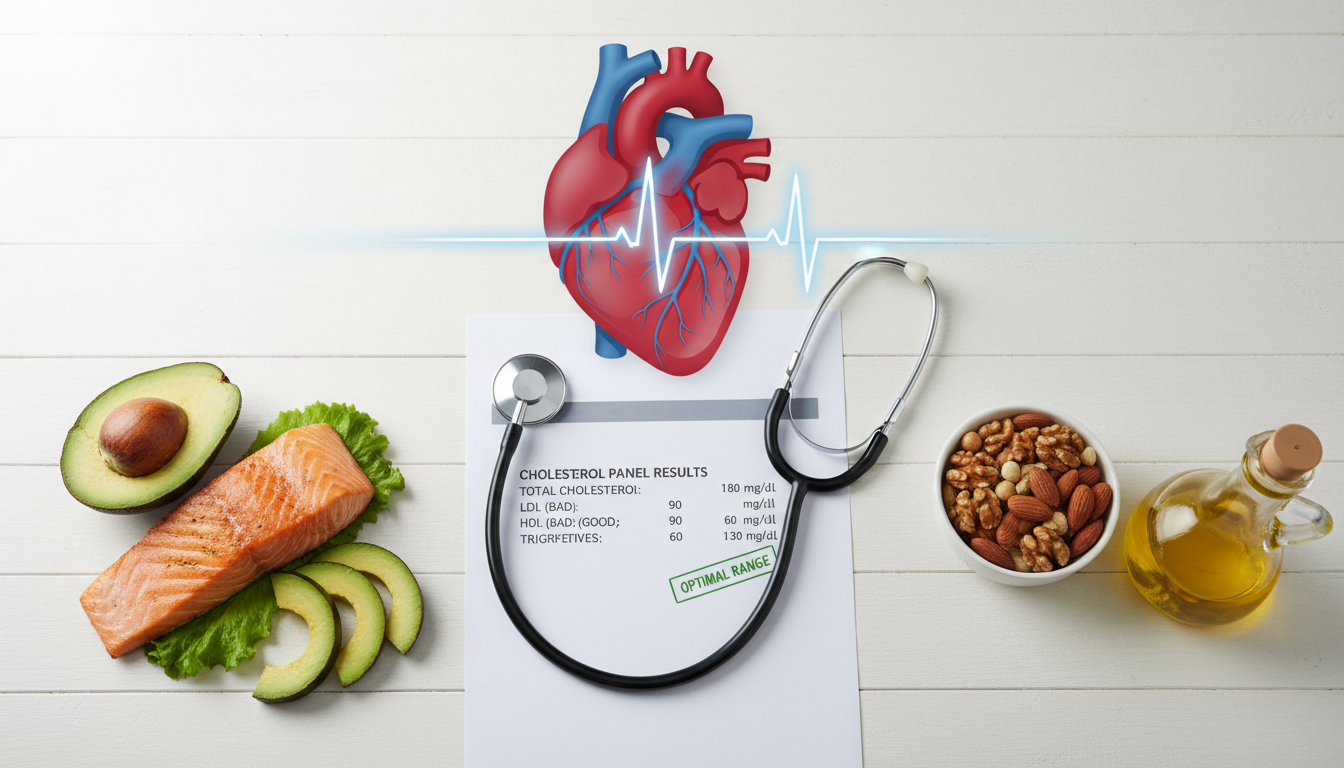
LDL often rises on keto—but triglycerides drop and HDL improves. Context matters more than one number. Don’t panic; look at the full picture, consider advanced testing, and work with a doctor who understands low-carb nutrition.
You’ve been doing keto for a few months. You feel great, you’ve lost weight, your energy is stable. Then you get bloodwork done and see your LDL cholesterol has increased.
Cue the panic.
Before you abandon ship, let’s look at what’s actually happening and what the research says.
The Common Pattern
- LDL cholesterol (the “bad” one): Often goes up ⬆️
- HDL cholesterol (the “good” one): Goes up ⬆️
- Triglycerides: Go down (often significantly) ⬇️
- Total cholesterol: May go up ⬆️
This concerns people because we’ve been told LDL is dangerous. But the story is more complicated.
Why Does LDL Rise on Keto?
Several mechanisms are at play:
Increased dietary fat — You’re eating more fat, so your body transports more fat. LDL particles carry fat and cholesterol through the bloodstream.
Weight loss — Actively losing weight temporarily increases LDL as your body mobilizes stored fat. This often normalizes after weight stabilizes.
Saturated fat intake — Saturated fat can increase LDL cholesterol in many people. Keto diets often include more saturated fat from butter, cheese, and fatty meats.
Some metabolically healthy, lean individuals on low-carb diets see dramatic LDL increases—sometimes over 200 mg/dL. This “lean mass hyper-responder” phenomenon is still being studied. If you’re lean, active, and see very high LDL, this may apply to you.
Is Higher LDL Dangerous?
This is where it gets nuanced. The traditional view is simple: higher LDL = higher heart disease risk. But emerging research suggests context matters:
🔬 Particle size matters — Large, fluffy LDL particles appear less atherogenic (artery-clogging) than small, dense particles. Low-carb diets tend to shift the pattern toward larger particles.
📈 Other markers matter — High triglycerides with low HDL is a concerning pattern. Low triglycerides with high HDL (common on keto) is generally favorable.
🔥 Inflammation matters — LDL becomes dangerous when it gets oxidized and triggers inflammation. Reducing sugar and processed foods may lower this risk.
🧬 Individual genetics matter — Some people are “hyper-absorbers” of dietary cholesterol and may need to adjust their approach.

What the Research Shows
"While LDL may increase, the overall cardiovascular risk profile often improves due to beneficial changes in other markers."
— American Heart Association review on ketogenic dietsStudies on ketogenic diets and cardiovascular risk factors show mixed but generally reassuring results:
- ✅ Triglycerides consistently improve (often dramatically)
- ✅ HDL consistently improves
- ✅ Blood sugar and insulin improve
- ✅ Blood pressure often improves
- 🟡 LDL results are variable—some see increases, others decreases
What Should You Do?
If your LDL has increased on keto, don’t immediately assume you’re at risk. One number doesn’t tell the whole story.
Step 1: Look at the full picture — Triglycerides, HDL, fasting glucose, HbA1c, and inflammatory markers (like CRP) provide important context.
Step 2: Consider advanced testing — An NMR lipid profile or coronary calcium score can provide more information about actual cardiovascular risk.
Step 3: Evaluate your food choices — Even on keto, food quality matters. Processed meats and excessive dairy affect people differently than whole foods.
Step 4: Give it time — If you’re actively losing weight, retest after weight has been stable for 2-3 months.
Step 5: Work with your doctor — Discuss your full health picture, family history, and individual risk factors.
Dietary Adjustments That May Help
If you want to try lowering LDL while staying low-carb:
- Emphasize monounsaturated fats (olive oil, avocados)
- Include fatty fish regularly
- Reduce saturated fat somewhat (less butter/cheese, more olive oil)
- Add soluble fiber (if carb budget allows)
The Bottom Line
A rise in LDL on keto is common but not automatically dangerous. The improvement in triglycerides, HDL, and metabolic markers often outweighs the LDL increase for many people.
However, cholesterol response is individual. Some people thrive on high-fat keto with no issues. Others may need to modify their approach.
Work with a healthcare provider who understands low-carb nutrition and can help you interpret your results in context.
This article is for educational purposes. Cholesterol management should be discussed with your healthcare provider, especially if you have existing cardiovascular disease or strong family history.
Sources
- Effects of Low-Carbohydrate Diets on Lipid Profiles — NIH/PMC
- Ketogenic Diets and Cardiovascular Risk Factors — American Heart Association