Protein: How Much Do You Actually Need?
The RDA might be wrong. Here's what modern research says about optimal protein intake for health, muscle, and metabolism.
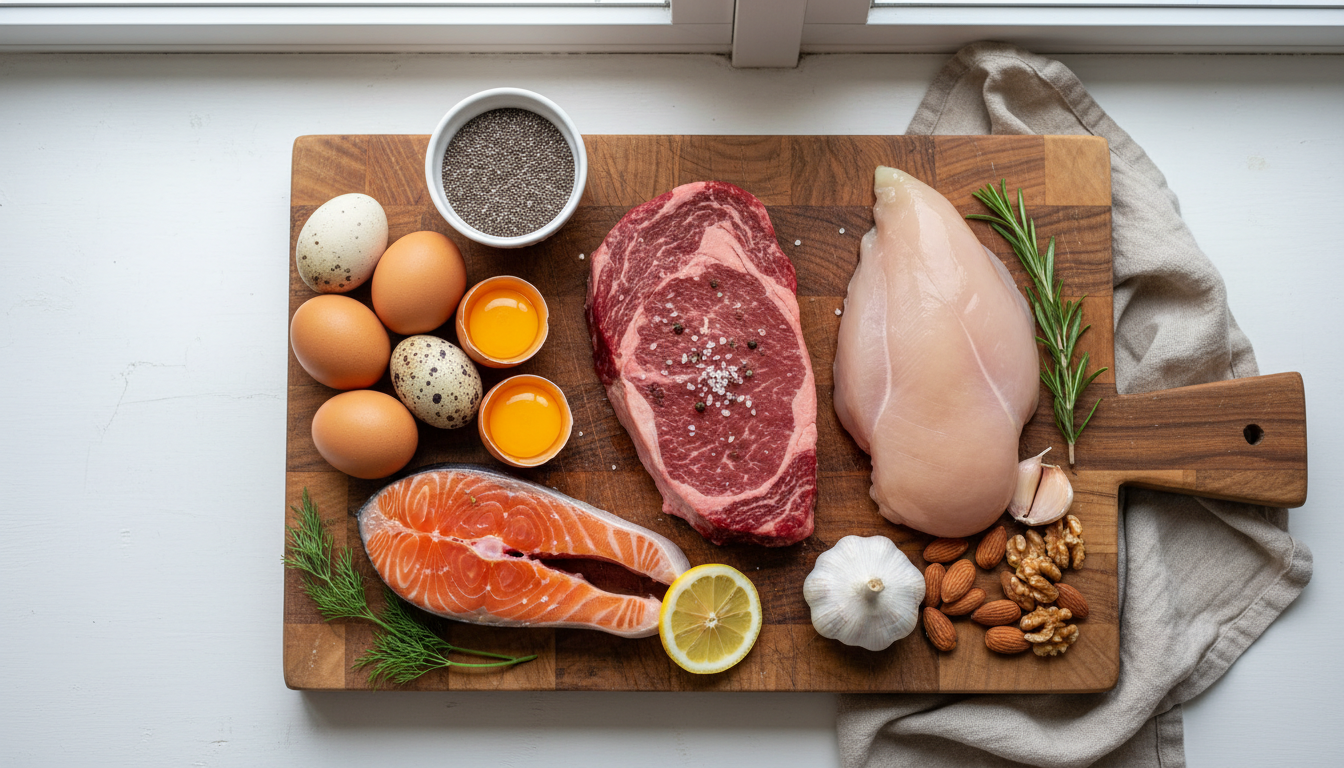
The RDA (0.8g/kg) is a minimum to avoid deficiency, not an optimum. Most people thrive on 1.2–2.0g per kg body weight — that’s 84–140g for a 70kg person. Triple what most people eat.
Protein is having a moment. Once the concern of bodybuilders, it’s now recognized as crucial for everyone—especially as we age. But how much do you actually need?
The answer might surprise you.
The RDA Is a Minimum, Not an Optimum
The RDA for protein is 0.8 g/kg body weight (0.36g/lb). For a 70kg person, that’s just 56 grams daily. But the RDA was established to prevent deficiency, not to optimize health. It’s the minimum to avoid malnutrition, not the amount for thriving.
Modern research suggests most people would benefit from significantly more.
What Research Actually Recommends
| Goal | Protein Target |
|---|---|
| General health | 1.4–2.0 g/kg (0.64–0.9 g/lb) |
| Muscle building | 1.6–2.2 g/kg (0.73–1.0 g/lb) |
| Fat loss (preserve muscle) | 2.3–3.1 g/kg (1.0–1.4 g/lb) |
| Older adults (40+) | 1.2–1.5 g/kg (combat muscle loss) |
For a 70kg person: 98–140 grams daily for general health — nearly triple the RDA.
Why Protein Matters More Than You Think
💪 Muscle Preservation — After age 30, you lose 3–8% of muscle mass per decade without active prevention. Adequate protein + resistance exercise is your primary defense.
🔥 Metabolism — Protein has the highest “thermic effect” — your body burns 20–30% of protein calories just digesting it (vs. 5–10% for carbs, 0–3% for fat).
😋 Satiety — Protein is the most filling macronutrient. Higher intake naturally reduces appetite for most people.
📈 Blood Sugar Stability — Protein has minimal impact on blood sugar and helps stabilize it when eaten with other foods.
🦴 Bone Health — Contrary to old myths, protein supports bone density when calcium intake is adequate.
How to Hit Your Target
| Meal | Food | Protein |
|---|---|---|
| Breakfast | 3 eggs + 2 strips bacon | ~25g |
| Lunch | Chicken thigh (170g) | ~35g |
| Dinner | Ribeye steak (225g) | ~50g |
| Snack | Greek yogurt (200g) | ~15g |
| Total | ~125g |
This requires intentional planning. Most people dramatically underestimate how much protein they eat—and overestimate.
Quality Matters Too
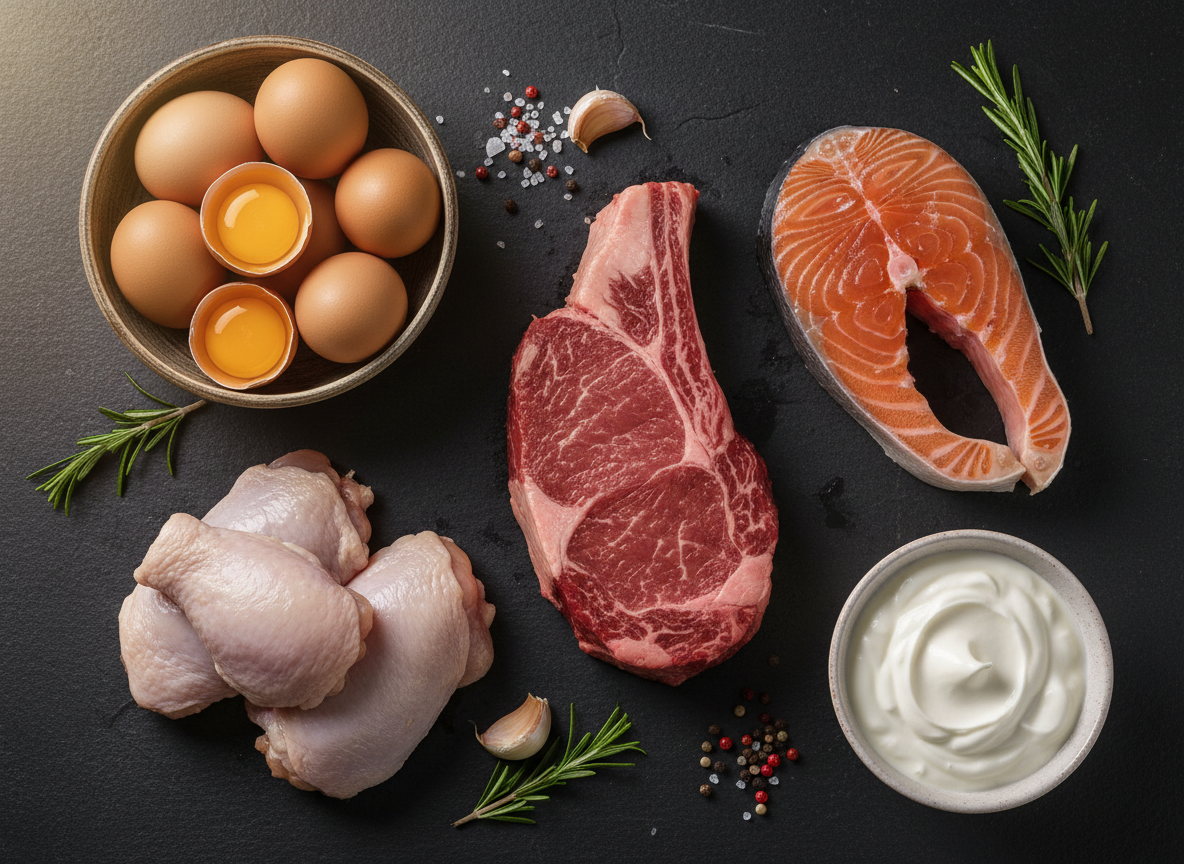
Not all protein is equal. Animal proteins are “complete”—they contain all essential amino acids and are more bioavailable.
- 🐟 Fatty fish (salmon, sardines, mackerel)
- 🥚 Eggs
- 🥩 Beef, lamb, pork
- 🍗 Poultry
- 🧀 Full-fat dairy (if tolerated)
Common Protein Myths
“Too much protein damages kidneys” — No evidence of this in healthy individuals. If you have existing kidney disease, talk to your doctor.
“Protein turns to sugar” — Gluconeogenesis is demand-driven, not supply-driven. Eating more protein doesn’t automatically raise blood sugar.
“You can only absorb 30g per meal” — Misunderstood. Your body can absorb much more; spacing throughout the day helps but isn’t critical.
Practical Tips
-
📱 Track for a week — Most people are shocked at how little protein they actually eat.
-
🥇 Protein first — Start meals with protein. You’ll get fuller faster.
-
🌅 Front-load if needed — Have a protein-rich breakfast if hitting your target is hard.
-
💰 Keep it simple — Eggs, ground beef, and rotisserie chicken are affordable, convenient sources.
The Bottom Line
"You probably need more protein than you're eating."
For most adults, 1.2–2.0 g/kg body weight is a good target—especially if you’re active, over 40, or trying to lose fat.
Start tracking, prioritize protein at meals, and watch how your energy, satiety, and body composition respond.
Protein needs vary by individual, activity level, and health status. This article provides general guidance based on current research.
Sources
- Dietary protein intake and human health — Food & Function (RSC Publishing) (2016)
- International Society of Sports Nutrition Position Stand: protein and exercise — Journal of the International Society of Sports Nutrition (2017)