Understanding Insulin Resistance: The Root of Metabolic Problems
Insulin resistance underlies most metabolic issues, from weight gain to type 2 diabetes. Here's what it is, why it happens, and what you can do about it.
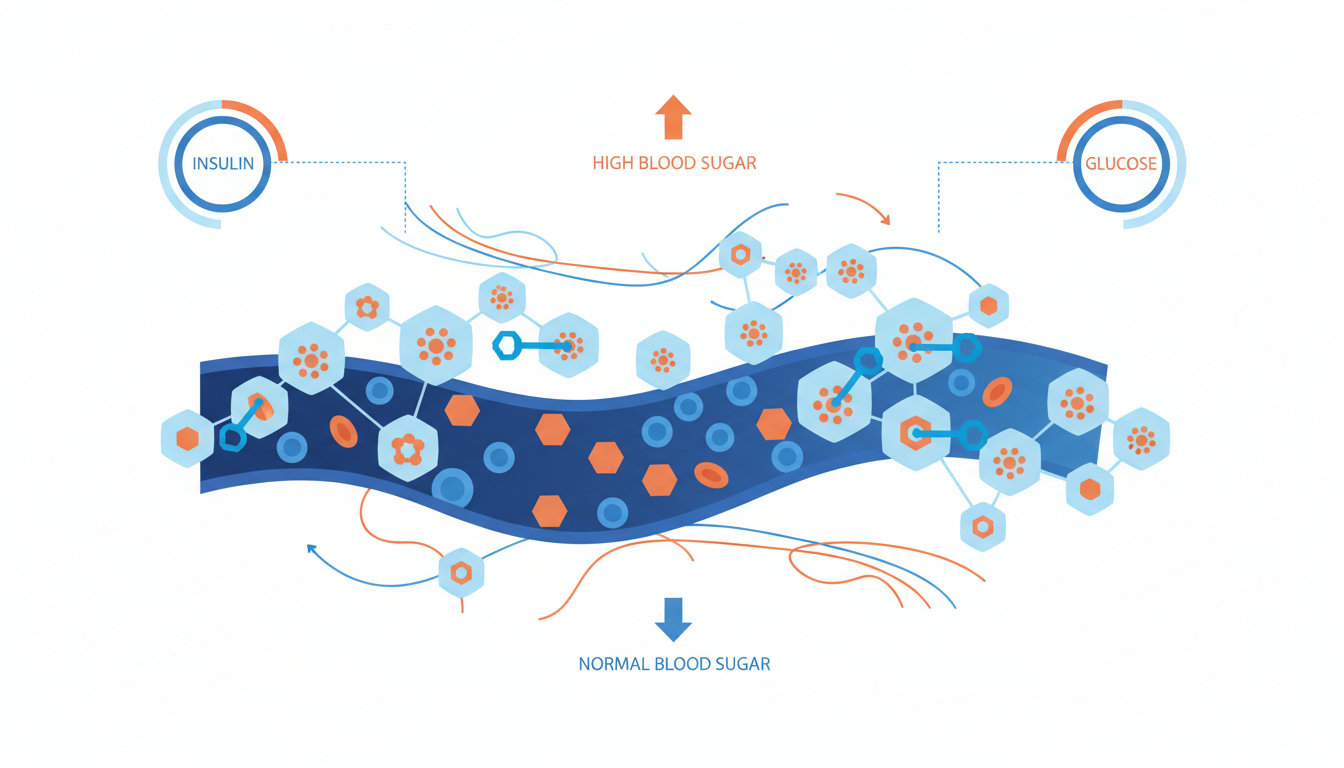
Insulin resistance = your cells ignore insulin’s signal, so blood sugar stays high and your body makes even more insulin. It’s reversible with low-carb eating, exercise, sleep, and stress management.
If there’s one concept that explains most metabolic health problems, it’s insulin resistance. Understanding it can change how you think about weight, energy, and long-term health.
What Is Insulin?
Insulin is a hormone from your pancreas. Think of it as a key that unlocks your cells to let glucose (blood sugar) in for energy. Without insulin, glucose stays stuck in your bloodstream.
Every time you eat carbohydrates (and to a lesser extent, protein), your blood sugar rises and your pancreas releases insulin to bring it back down.
What Is Insulin Resistance?
Insulin resistance occurs when your cells stop responding properly to insulin’s signal. The “key” doesn’t work as well anymore.
- Glucose can’t enter cells efficiently
- Blood sugar stays elevated
- Pancreas produces more insulin to compensate
- Cells become even more resistant
- You end up with high insulin AND high blood sugar
- Eventually → type 2 diabetes
Why Does It Happen?
According to a 2025 review in the International Journal of Molecular Sciences, insulin resistance develops through multiple interconnected pathways:
🍞 Chronic overconsumption of carbohydrates — Constantly elevated blood sugar means constantly elevated insulin. Over time, cells become “deaf” to the signal.
🎯 Excess body fat, especially visceral fat — Fat stored around organs releases inflammatory compounds that interfere with insulin signaling.
🔥 Chronic inflammation — Low-grade inflammation damages the cellular machinery that responds to insulin.
🪑 Sedentary lifestyle — Muscle is a major site of glucose disposal. Less muscle activity means less glucose clearance.
😴 Poor sleep and chronic stress — Both elevate cortisol, which raises blood sugar and promotes insulin resistance.
How Common Is It?
A 2025 systematic review found that up to 40% of adults in developed countries show signs of insulin resistance. Many are insulin resistant without knowing it—you don’t have to be diabetic or even overweight.
Signs You Might Be Insulin Resistant
- Difficulty losing weight, especially around the midsection
- Energy crashes after meals
- Constant hunger or cravings, especially for carbs
- Brain fog
- Skin tags or dark patches on skin (acanthosis nigricans)
- High fasting blood sugar or HbA1c
- High triglycerides, low HDL cholesterol
What Can You Do?
The good news: insulin resistance is largely reversible with lifestyle changes.
🥩 Reduce carbohydrate intake — Less glucose in means less insulin needed. This is why low-carb and ketogenic diets are effective for many people.
🚶 Move your body — Exercise improves insulin sensitivity directly. Even walking helps.
💪 Build muscle — Muscle tissue is metabolically active and helps clear glucose from blood.
😴 Prioritize sleep — Poor sleep directly worsens insulin resistance.
🧘 Manage stress — Chronic stress elevates cortisol, which raises blood sugar.
⏰ Consider time-restricted eating — Giving your body breaks from eating allows insulin levels to drop.
The Bottom Line
"Insulin resistance is at the root of most metabolic dysfunction. But it's not a life sentence—it responds well to dietary and lifestyle changes."
If you suspect you’re insulin resistant, talk to your doctor about testing (fasting insulin, HOMA-IR, or an oral glucose tolerance test can all provide information).
Then focus on the fundamentals: fewer processed carbs, more movement, better sleep, and managing stress. Your cells can learn to listen to insulin again.
Sources cited in this article are from peer-reviewed journals. This is educational information, not medical advice.
Sources
- Unraveling the Mystery of Insulin Resistance: From Principle Mechanistic Insights and Consequences to Therapeutic Interventions — MDPI - International Journal of Molecular Sciences (2025-03-19)
- Global prevalence of insulin resistance in the adult population — Frontiers in Endocrinology (2025-08-01)