Slow-Roasted Duck Legs
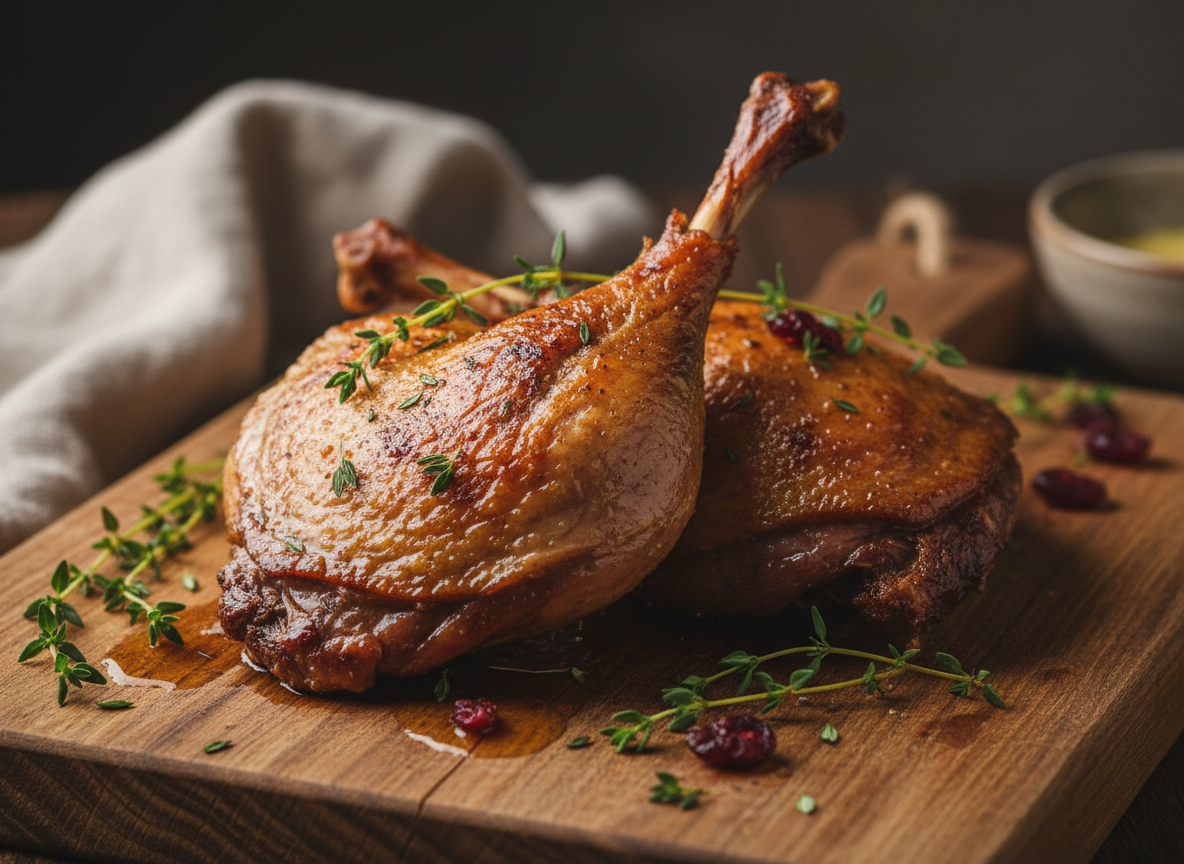
Confit-style duck legs with shattering crispy skin and fall-off-the-bone meat. Low effort, high reward — just salt, time, and heat.
Instructions
Instructions
-
Season ahead. Pat duck legs dry with paper towels. Season generously with salt and pepper on all sides. For best results, refrigerate uncovered on a wire rack for 2–12 hours — this dries the skin for extra crispiness.
-
Preheat the oven. Set your oven to 150°C (300°F).
-
Arrange the legs. Place duck legs skin-side up in a roasting pan. Tuck garlic cloves and thyme sprigs around and under the legs. No need to add extra fat — duck legs are self-basting.
-
Slow roast. Cook for 1 hour 30 minutes at 150°C (300°F). The fat will render out and the meat will become very tender.
-
Blast the skin. Increase oven temperature to 220°C (425°F). Roast for a final 20–25 minutes until the skin is deep golden and crispy. Keep an eye on it — the line between crispy and burnt is thin at this temperature.
-
Check doneness. Internal temperature should reach at least 74°C (165°F) at the thickest part of the thigh. The meat should pull away from the bone easily.
-
Rest briefly. Let the legs rest for 5 minutes before serving.
Tips
- Dry skin = crispy skin. The overnight uncovered rest in the fridge makes a real difference. If you’re short on time, pat dry thoroughly and it’ll still be good.
- Save the rendered fat. You’ll get 100–150ml of duck fat from this cook. Strain it and refrigerate — it keeps for months and is excellent for roasting or frying.
- Don’t crowd the pan. Give the legs space so heat circulates evenly and skin crisps on all sides.
- Leftovers shred well. Pull the meat off the bone and use it in salads or lettuce wraps.